A strong retaining wall isn’t just about looking good—it’s an engineered solution designed to fight gravity, hold back tons of soil, and manage water flow. In Chesapeake Ranch Estates-Drum Point, our varied terrain and coastal weather make proper retaining wall function essential.
Unfortunately, many walls are improperly designed or simply reach the end of their lifespan. An overlooked retaining wall issue can escalate quickly, turning a minor repair into a major property disaster, including soil collapse and foundation damage.
Here are the top five warning signs that your retaining wall is failing, and how we address them at Adams Property Works.
1. The Lean: Is Your Wall Bowing or Tipping?
This is the most common and obvious sign of failure. If your once-vertical wall is visibly leaning outward or bowing in the middle, it’s waving a red flag.
- The Cause: This is typically caused by
hydrostatic pressure. When heavy rains hit the Chesapeake area, soil saturates like a sponge. Water is incredibly heavy. If your wall lacks adequate drainage (gravel backfill and weep holes), that saturated soil pushes with immense force, exceeding what the wall was designed to hold.
- The Fix: A severe lean often means the wall is structurally compromised. In most cases, this requires
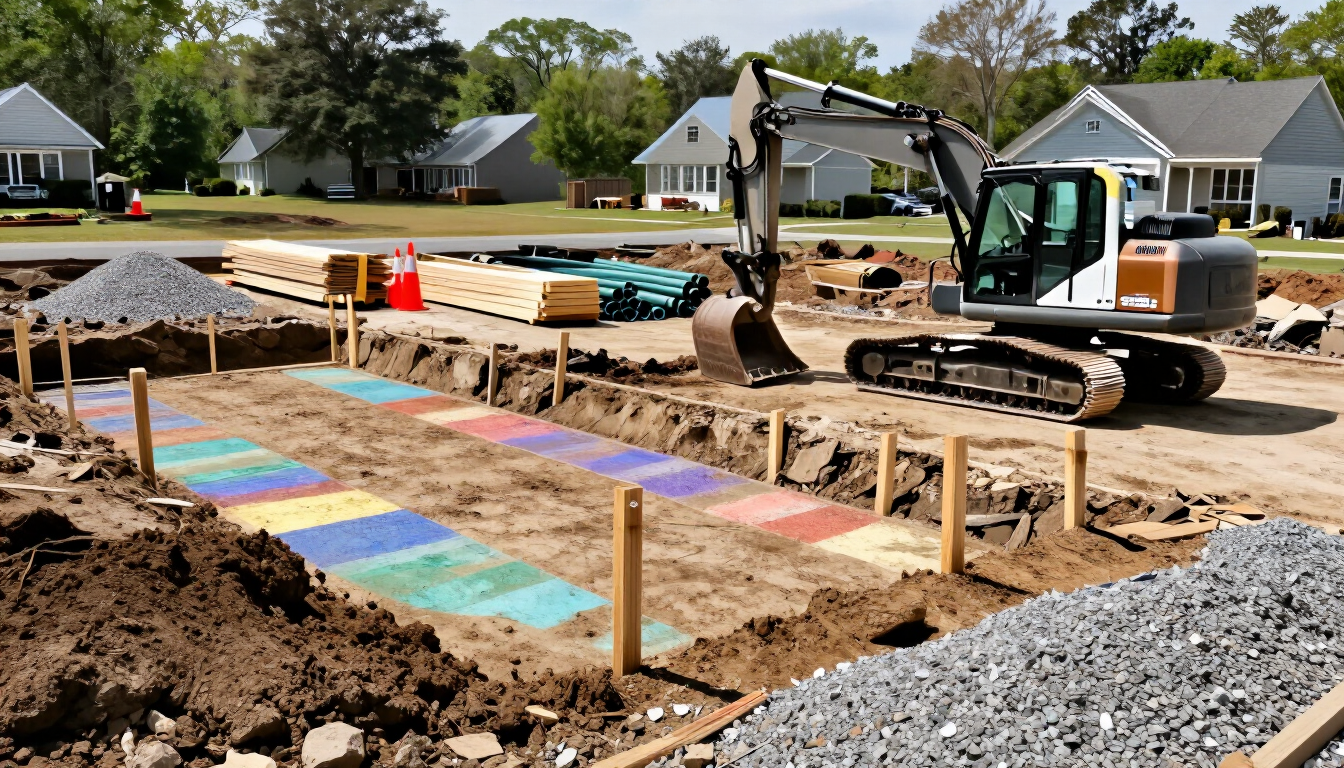
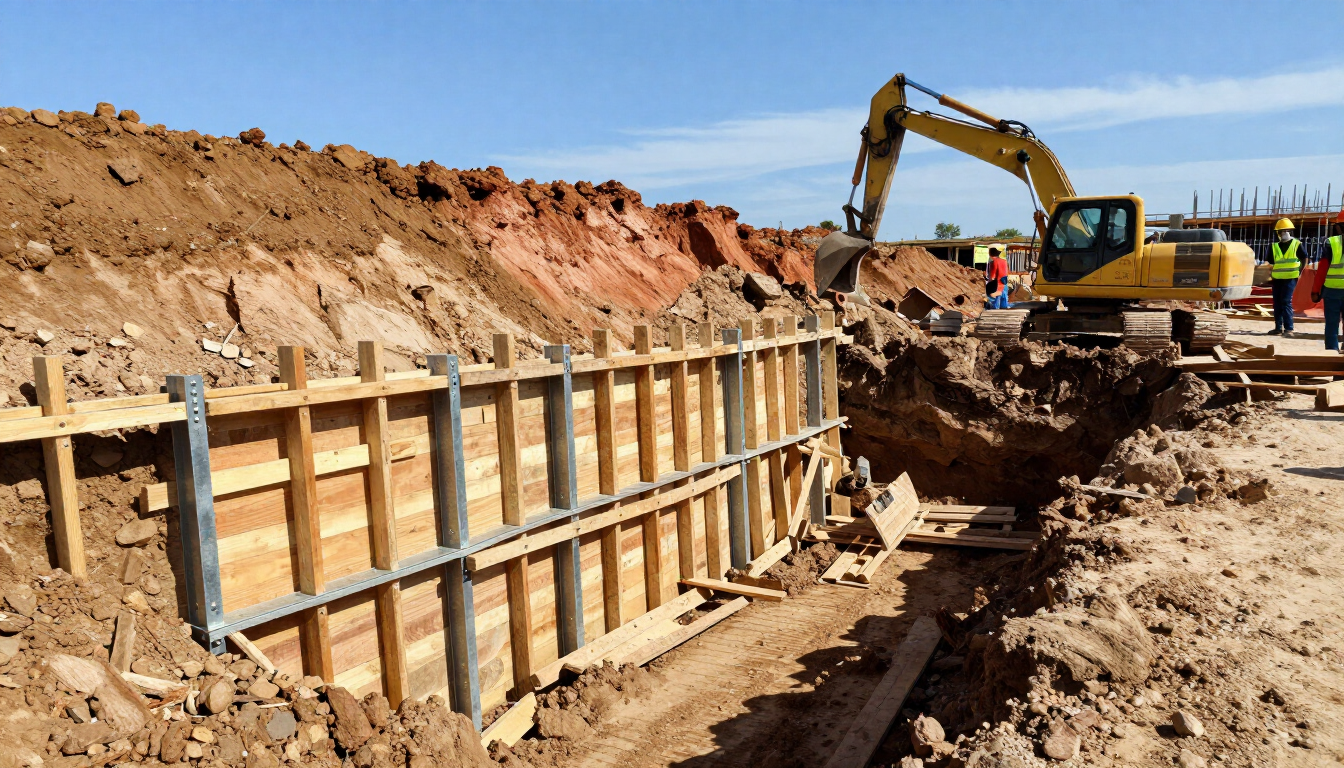
excavating the soil behind the wall, installing proper drainage infrastructure, and either reinforcing or rebuilding the section to standard.
2. Separation Anxiety: Cracks and Gaps
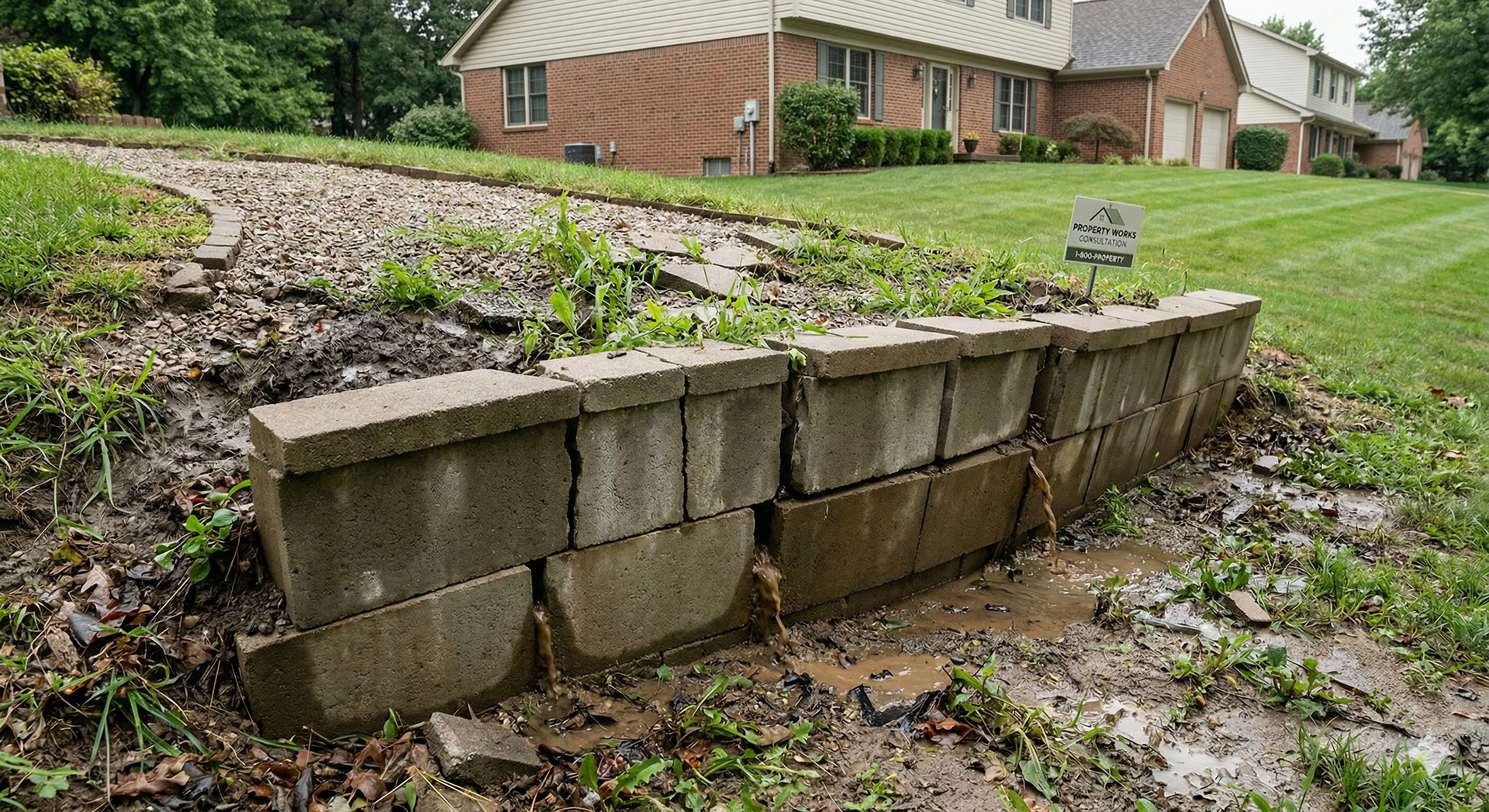
Not all cracks are created equal. Fine hairline cracks in concrete can be normal aging, but large, wide, or deep fissures are an emergency. Similarly, gaps opening up between the wall and the soil it should be retaining are a bad sign.
- The Cause: Cracks result from the wall moving or settling unevenly. It can be due to poor soil preparation before the wall was built (the footing failed) or the result of soil pressure pushing segments apart. Gaps behind the wall often occur when the backfill soil has eroded or was not properly compacted.
- The Fix: For concrete or block walls, serious cracks usually require
structural repair or replacement. If the issue is shifting segments, we may need to reinforce the base or implement advanced anchors. Simply patching a large, structural crack won't solve the underlying problem.
3. The Rot Squad: Decaying Wood Walls
Wood retaining walls add a rustic, natural aesthetic, but they don't last forever. If you have a timber wall, you must actively watch for decay.
- The Cause: Wood naturally breaks down over time. While pressure-treated lumber is resistant, the treated barrier eventually wears thin, especially in the damp environment of retaining wall backfill. Water and soil microbes cause rot, and termites can hollow out the timbers.
- The Fix: If the timber is soft, spongy, or crumbling when poked, the structural integrity is gone.
Rotted sections must be removed and replaced with new, properly treated timber or, ideally, upgraded to concrete blocks for a longer-term solution.
4. Sinkholes and Erosion Behind the Wall
Sometimes the wall looks fine, but the landscape is failing. If you notice localized sinkholes or areas of depression in the lawn right behind the wall, you have an internal problem.
- The Cause: This usually points to a
failure in the drainage system. If groundwater can’t escape through the wall (via weep holes), it will travel along the back of the wall, carrying fine soil particles with it. This creates underground voids (sinkholes) that can eventually cause the upper ground—and the wall—to collapse.
- The Fix: This requires
excavation behind the wall to address the drainage. We must remove the existing backfill, install proper filter fabric to prevent soil migration, put in new, clean aggregate, and verify that the weep holes are functioning correctly.
5. Waterlogged Foundation: Pooling Water at the Base
This is the sneaky killer of retaining walls. If you see consistent puddling, mud, or saturated ground right at the base of the wall (where it should be dry), the entire foundation is at risk.
- The Cause: Once again, this is a
drainage failure. Water is pooling because it cannot escape the soil behind the wall, and it's saturating the footing. Saturated soil loses its ability to support weight, allowing the wall's footing to sink or shift.
- The Fix: This is a top priority fix. We need to
evaluate the whole water management strategy for that slope. It usually involves
installing proper weep holes/drain tile, regrading the slope above the wall, and improving the gravel backfill. The goal is to make sure water has a fast, clear path out and away from the wall’s structure.
Don't Wait for a Collapse
If your wall is showing signs 1, 2, 4, or 5, you likely have a water pressure problem that is actively destroying the structure. Ignoring it is expensive. A small, leaning retaining wall is far cheaper to fix than a catastrophic slope failure that takes your yard, deck, or home foundation down with it.
If you are seeing any of these signs in your landscape,
call Adams Property Works for a structural integrity inspection. We are experts in retaining wall engineering and repair.
Contact us today to schedule your consultation and protect your property.